
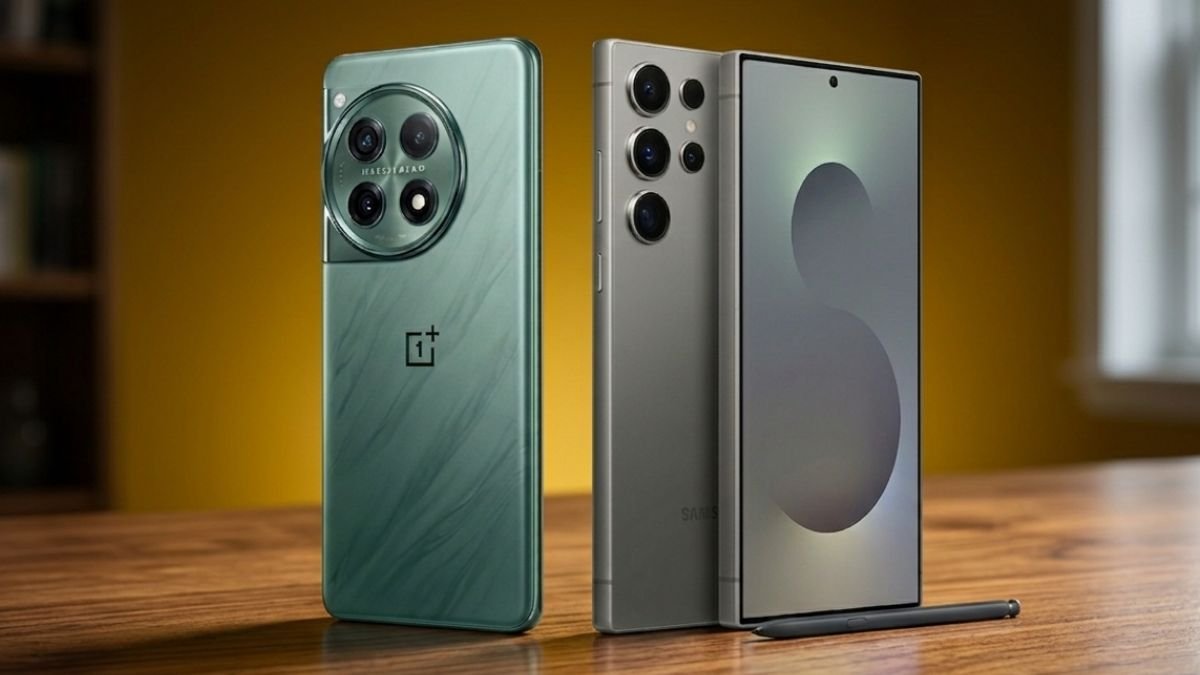
The battle for smartphone supremacy has taken an interesting turn in 2026. On one side, we have the Samsung S25 Ultra, the pinnacle of Android engineering, and on the other, the OnePlus 12, a device that continues to challenge the “Ultra” status quo with its aggressive pricing and top-tier specs. If you are looking to upgrade your device, the OnePlus 12 vs Samsung S25 Ultra debate is likely at the top of your mind. In this comprehensive comparison, we break down every detail to see which one deserves your hard-earned money.
Table of Contents:
Design and Build Quality: Premium vs. Practical
The Samsung S25 Ultra follows a refined design language with its Titanium frame and a sharp, boxy silhouette that screams “business.” It feels substantial in the hand and houses the iconic S-Pen, which remains a unique selling point.
In contrast, the OnePlus 12 opts for a more ergonomic, curved design. Its flowy emerald glass back and circular camera module have become a fan favorite. While the S25 Ultra feels more “industrial,” the OnePlus 12 is arguably more comfortable for long gaming sessions or one-handed use.
Also Read: Vivo X300 Ultra Launch Date in India: 200MP Dual Zeiss Camera & Pro-Level Specs Leaked!
Display Excellence: Dynamic AMOLED vs. Pro XDR
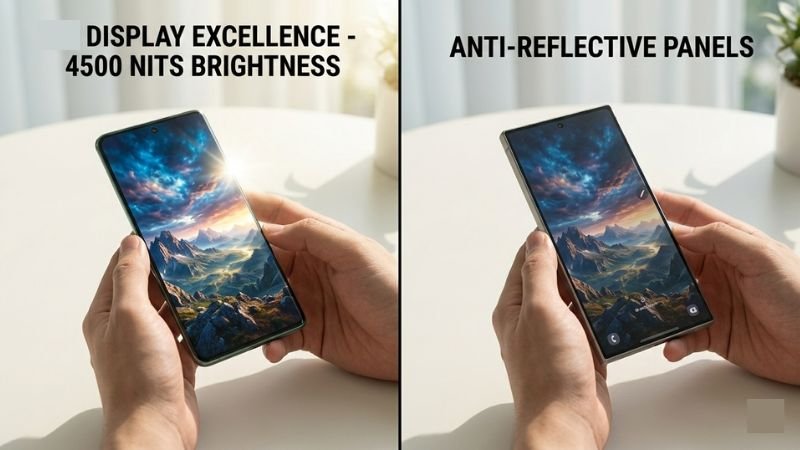
When comparing the OnePlus 12 vs Samsung S25 Ultra displays, we are looking at two of the best panels in the world:
- Samsung S25 Ultra: Features a 6.8-inch Dynamic AMOLED 2X with a futuristic anti-reflective coating that makes it readable even under the direct 12:00 PM sun.
- OnePlus 12: Boasts a 6.82-inch LTPO AMOLED Pro XDR display with a staggering 4500 nits peak brightness.
While Samsung wins on color accuracy and the flat-panel utility (great for S-Pen), OnePlus offers a slightly more vibrant experience with its Dolby Vision support.
OnePlus 12 vs Samsung S25 Ultra Performance: Snapdragon Powerplay
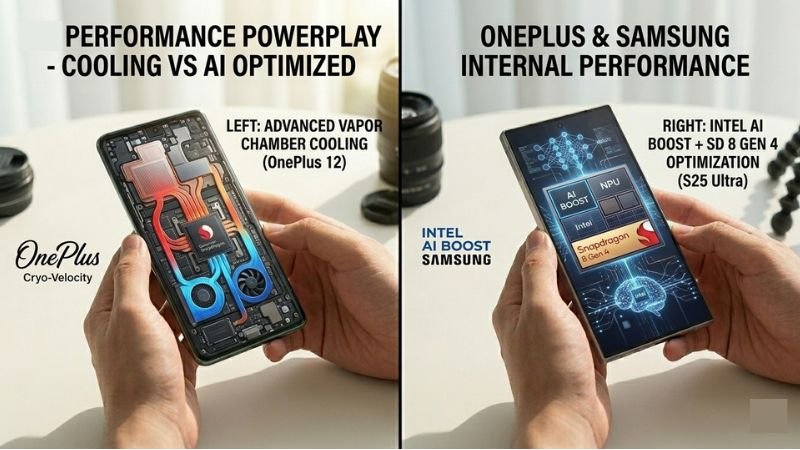
Under the hood, the OnePlus 12 vs Samsung S25 Ultra comparison gets intense. Both phones are powered by high-end Snapdragon silicon, but the optimization differs:
- Samsung S25 Ultra: Uses the “Snapdragon 8 Gen 4 for Galaxy,” clocked slightly higher for intensive AI tasks and video rendering.
- OnePlus 12: Uses the standard Snapdragon 8 Gen 3/4 (depending on region/batch), but pairs it with the Trinity Engine and a massive Vapor Chamber cooling system.
For daily tasks, you won’t notice a difference. However, for hardcore Genshin Impact players, the OnePlus 12 often maintains a more consistent frame rate due to its superior thermal management.
Gaming Performance: Ray Tracing and Thermal Management
For gamers, the OnePlus 12 vs Samsung S25 Ultra battle is won in the cooling chamber. The OnePlus 12 features a massive 9140mm² Dual Cryo-velocity VC, which is larger than most gaming phones. It supports Hardware-level Ray Tracing, making shadows and reflections in games like Genshin Impact look hyper-realistic.
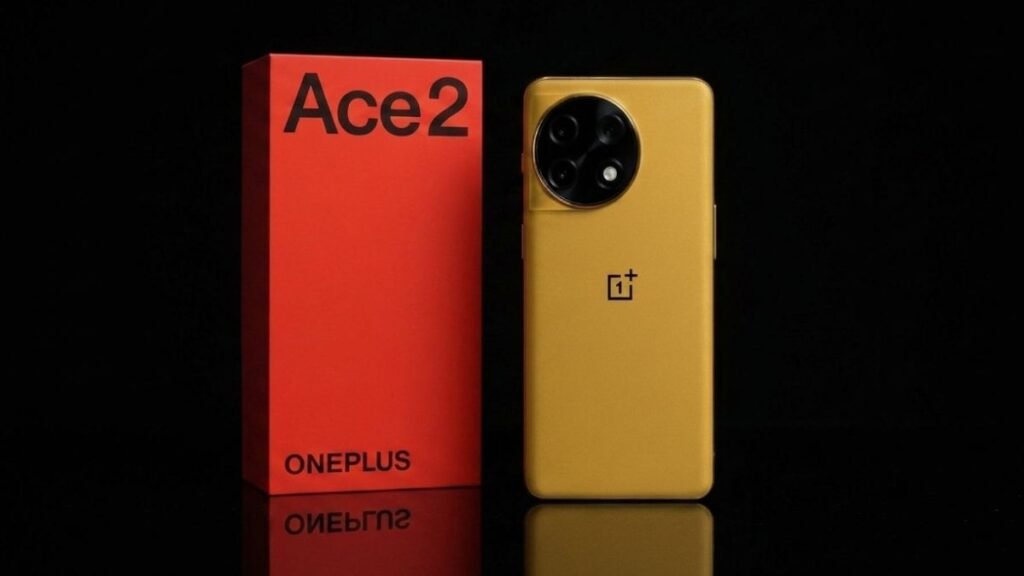
Also Read: OnePlus Ace 2 Review: Still the Performance King in 2026?
Samsung S25 Ultra is no slouch, but its slim Titanium body tends to get warm during 4K video recording or heavy gaming. Samsung’s software often throttles the processor to keep the heat down, whereas OnePlus allows the Snapdragon chip to run at its peak for longer durations.
Camera Battle: 200MP vs. Hasselblad Magic
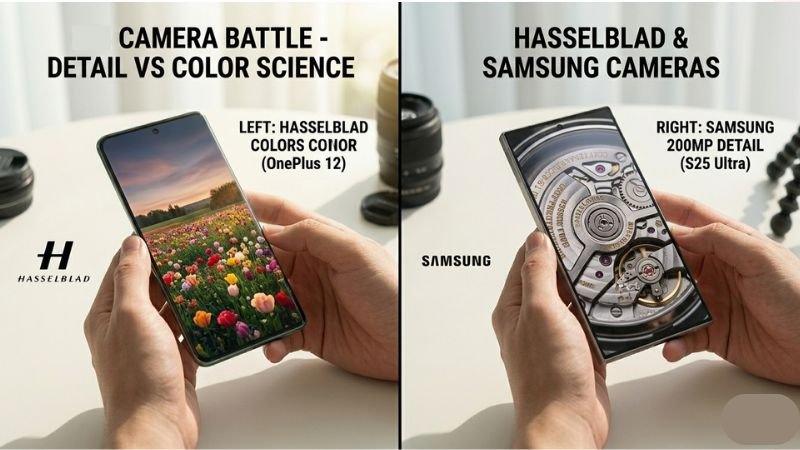
This is where most users make their choice in the OnePlus 12 vs Samsung S25 Ultra rivalry.
- Samsung S25 Ultra: The 200MP main sensor is a detail monster. Its 100x Space Zoom and improved AI-assisted night videography make it the best choice for professional mobile photographers.
- OnePlus 12: Features a 50MP Sony LYT-808 main sensor tuned by Hasselblad. It produces “soulful” photos with natural skin tones and a cinematic feel. Its 64MP periscope lens is excellent for portraits but cannot match Samsung’s extreme zoom range.
Comparison Table OnePlus 12 vs Samsung S25 Ultra
| Feature | OnePlus 12 | Samsung S25 Ultra |
| Display | 6.82″ 120Hz LTPO (4500 Nits) | 6.9″ 120Hz Dynamic AMOLED (Anti Reflect) |
| Processor | Snapdragon 8 Gen 3/4 | Snapdragon 8 Gen 4 (Galaxy) |
| Main Camera | 50MP Sony LYT-808 (Hasselblad) | 200MP ISOCELL |
| Telephoto | 64MP (3x Optical/120x Digital) | 50MP + 10MP (5x & 3x Optical/100x Digital) |
| Front Camera | 32MP | 12MP |
| Battery | 5400mAh | 5000mAh |
| Charging | 100W Wired (26 Mins Full) | 45W Wired (65 Mins Full) |
| Wireless Charging | 50W Wireless | 15W Wireless |
| S-Pen Support | No | Yes (Built-in) |
| Security | Ultra-thin Optical | Ultrasonic In-Display |
| AI Features | Basic AI Eraser | Galaxy AI |
| Starting Price | ₹64,999 | ₹1,29,999 |
Battery and Charging: The OnePlus Advantage
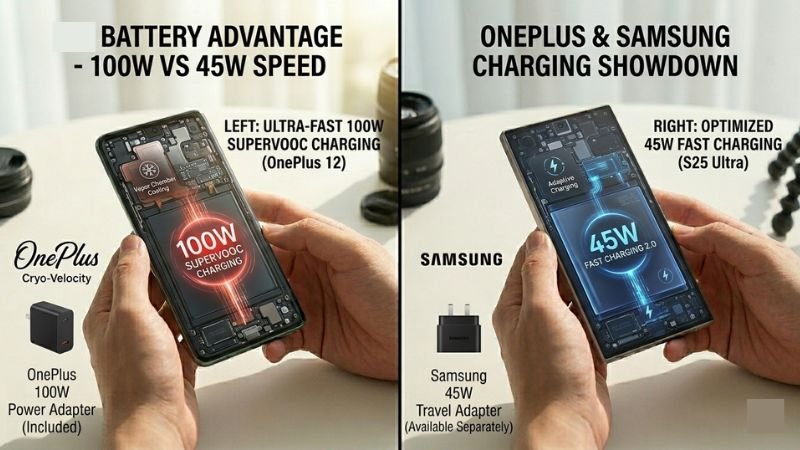
If you hate waiting for your phone to charge, the OnePlus 12 vs Samsung S25 Ultra comparison has a clear winner. The OnePlus 12 features a 5400mAh battery with 100W Super VOOC charging, taking you from 1% to 100% in about 26 minutes.
The Samsung S25 Ultra sticks to its conservative 45W charging. Even though its battery optimization is world-class, it still takes over an hour to full charge, which feels “old-school” in 2026.
The AI Revolution: Galaxy AI vs. OnePlus Smart Optimization
In 2026, a smartphone is not just about hardware; it’s about how “smart” it actually is. In the OnePlus 12 vs Samsung S25 Ultra comparison, the AI approach is vastly different. Samsung offers Galaxy AI, which includes “Circle to Search,” “Live Call Translate,” and “Note Assist.” These features are deeply integrated into the system, making the S25 Ultra a productivity powerhouse.
On the other hand, OnePlus focuses on “Invisible AI.” Their AI works behind the scenes to manage battery health and RAM allocation. While you don’t get a fancy “Translate” button everywhere, the OnePlus 12 feels snappy even after 2 years of usage because its AI prevents the system from slowing down.
Software and Longevity
Samsung leads with its One UI 7/8, offering 7 years of guaranteed OS updates and a suite of “Galaxy AI” features that are actually useful (like live call translation). OnePlus offers Oxygen OS, which is cleaner and faster, but its update policy is generally limited to 4-5 years.
Security and Biometrics: Ultrasonic vs. Optical
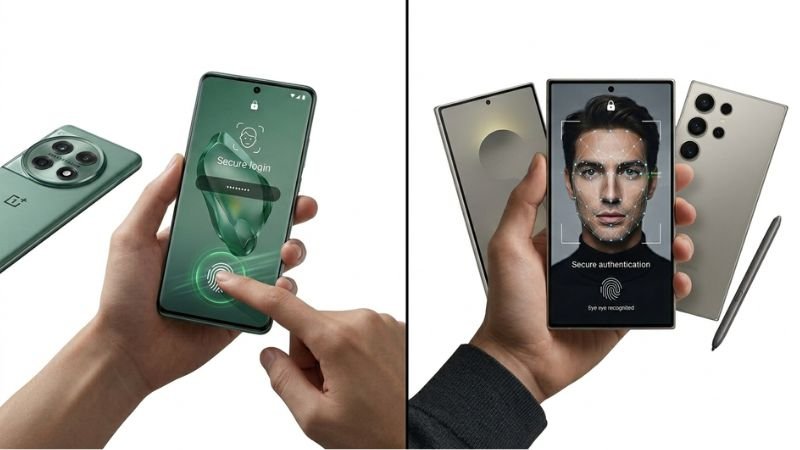
A small but vital detail in the OnePlus 12 vs Samsung S25 Ultra comparison is the fingerprint sensor. Samsung uses a 3D Ultrasonic sensor, which works even if your fingers are wet or oily. It is faster and more secure. OnePlus uses an Ultra-thin Optical sensor, which is very fast but requires a bright light to flash under your thumb, which can be annoying in a dark room at night.
Pros and Cons
Samsung S25 Ultra
- Pros: Best zoom camera, S-Pen utility, 7 years of updates.
- Cons: Very expensive, slow charging, bulky design.
OnePlus 12
- Pros: Amazing value for money, 100W fast charging, beautiful display.
- Cons: No S-Pen, cameras are good but not “Ultra” level, shorter update cycle.
Final Verdict: Which One Should You Buy?
In the OnePlus 12 vs Samsung S25 Ultra showdown:
- Buy the Samsung S25 Ultra if you want the absolute best camera, need the S-Pen for work, and don’t mind spending over a lakh for a phone that will last you 7 years.
- Buy the OnePlus 12 if you want 90% of the flagship experience at 50% of the price. It is the smarter choice for gamers and people who value fast charging and ergonomic design.
OnePlus 12 vs Samsung S25 Ultra FAQs:
1. Is OnePlus 12 better than S25 Ultra for gaming?
Ans: Yes, due to its better cooling system and faster charging.
2. Does the S25 Ultra have a better camera?
Ans: Yes, especially for long-distance zoom and high-detail 200MP shots.
3. Why is OnePlus 12 cheaper?
Ans: OnePlus saves costs by skipping features like the S-Pen and ultra-long zoom hardware.