
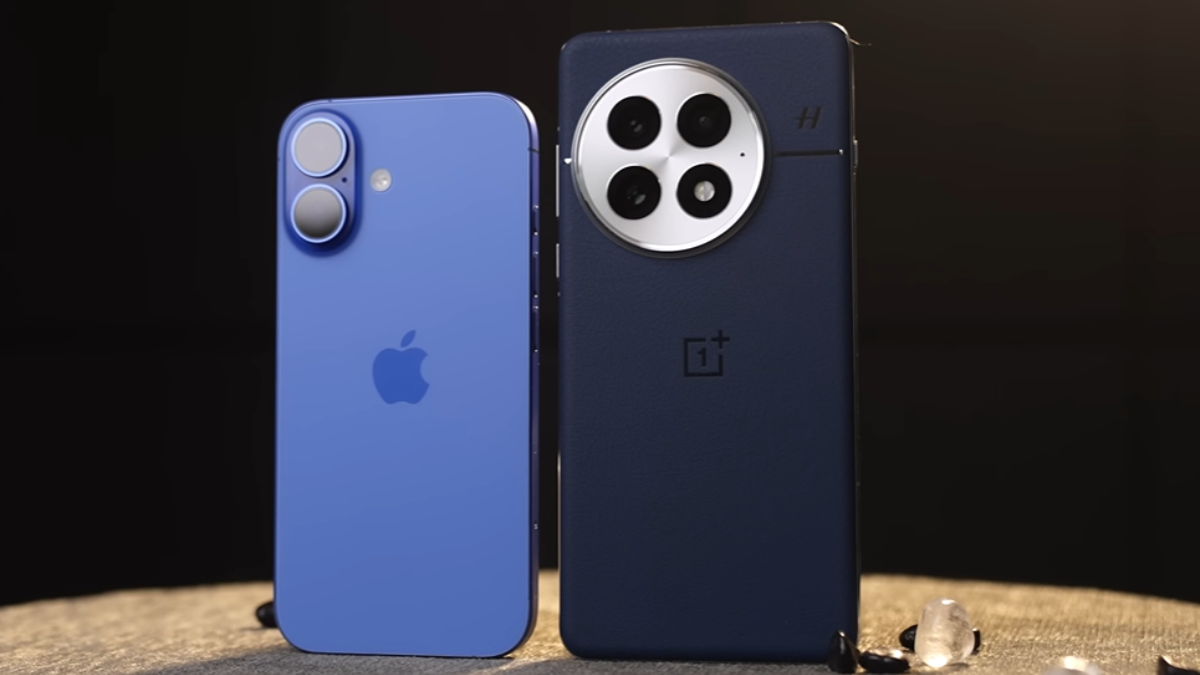
If you compare the iPhone to the OnePlus, it might seem like the iPhone has very poor specifications. However, every user has different requirements and priorities, and both phones offer different things. If you’re confused about which of these two phones to choose, I’ll help you clear up your confusion.
Table of Contents:
Design:
Both phones offer very different things. You’ll understand that from the design. I think the OnePlus 13 focuses on pro users, which is a large phone but also comfortable to hold. While the iPhone 16 focuses on average users who don’t want a very large phone, they prefer a handy phone, and it’s quite comfortable for them to use for extended periods.
Also Read: Google Pixel 11 Pro: The Ultimate AI Smartphone Review (2026)
And if I talk about the design features, it’s the same story. The OnePlus 13 is more for pro users. It has a Type-C port which is high-speed USB 3.2. So, data transfer will be very fast. And the OnePlus 13 has an IR blaster, so it can be used as a remote for anything. And OnePlus has given the option to use two physical SIMs here, but also supports eSIM.
And one more thing that people like in OnePlus phones is the alert slider, which allows you to switch the phone between ring, vibrate, and silent modes without unlocking it.
Now, a similar feature is also available in the iPhone 16. It has an action button that we can customize. Camera, torch, and silent mode are already there. In fact, Apple has also given a separate camera control button, which opens the camera when pressed. If you want to do wireless charging, iPhones have magnets for magnetic wireless charging. And if you use an Apple charger, it charges at 25W.
Now, the interesting thing is that the OnePlus 13 charges wirelessly at 50W, but you’ll have to buy a separate case if you want magnetic wireless charging. However, the haptics are good on both phones. But in the OnePlus 13, OnePlus has used haptics very well throughout the entire UI.
Display:
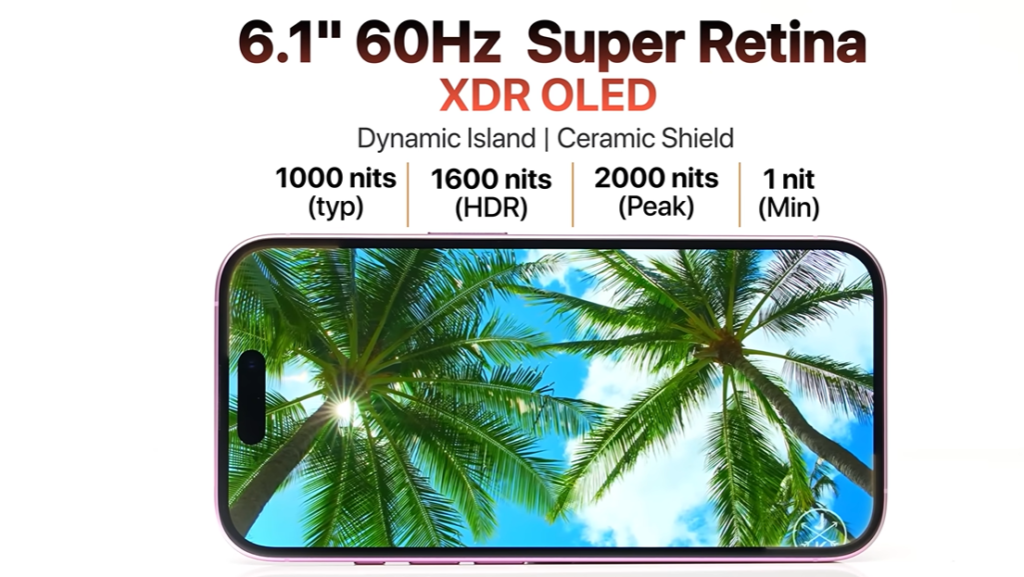
And if we talk about the displays of both phones, I think the bezels on the OnePlus 13 are smaller. If we compare the display specifications of both phones, there’s no competition because the OnePlus 13 specifications are superior. The biggest change is in the high refresh rate. The OnePlus 13 offers a 120Hz refresh rate, while the iPhone 16 is at 60Hz. And practically or technically speaking, a 120Hz refresh rate is much smoother. The biggest proof of the refresh rate difference is noticeable while scrolling. Apple has intentionally kept the scrolling so slow.
But in one aspect, the I Phone 16 felt far ahead of the OnePlus 13, and that’s in outdoor visibility. The iPhone 16’s display gets very bright.
And one more thing, both phones support Dolby Vision. However, the content visibility is better on the OnePlus 13. Only the outdoor visibility of the iPhone 16 is better, but the OnePlus 13 is superior in this department overall.
Battery Test:
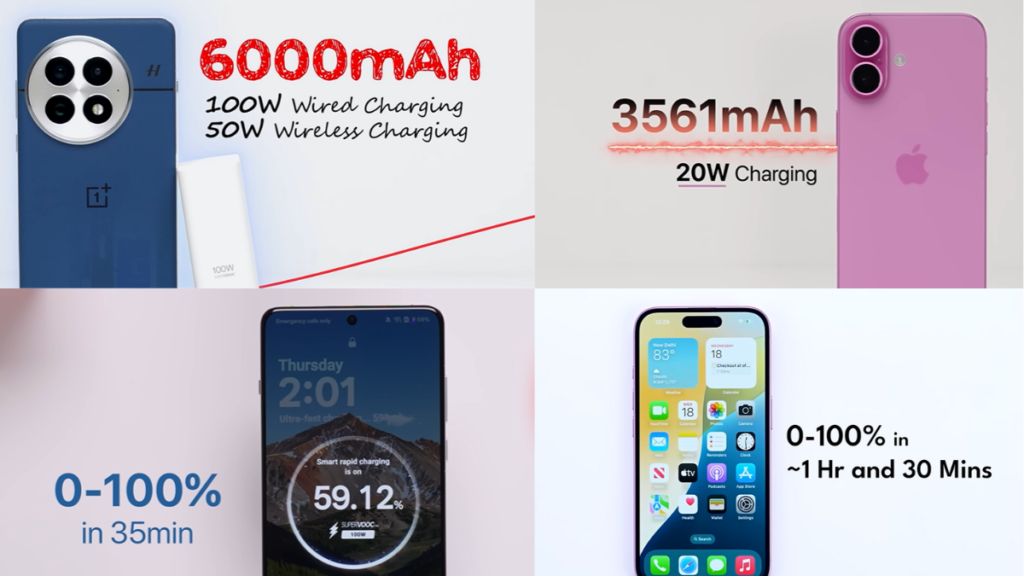
Now let’s talk about battery life. The OnePlus 13 offers 8 to 9 hours of screen-on time, while the iPhone 16 provides 6 to 7 hours. Not only does the OnePlus 13 have better battery backup compared to the iPhone, but there’s also a huge difference in charging speed. The OnePlus 13 charges from 0 to 100% in 35 minutes. In fact, the OnePlus 13 even offers 50W wireless charging. If we talk about the iPhone 16, it takes 1 hour and 30 minutes to charge from 0 to 100%. And the iPhone 16’s wireless charging is only 25W. So, overall, if we compare all aspects, the OnePlus 13 is far ahead.
Software and AI:
Now let’s discuss the software department. Here, the I Phone 16 runs iOS and the OnePlus 13 runs Android. And it’s your choice which one you prefer.
But if you’re confused, I’ll tell you the advantages and disadvantages of both.
Nowadays, OnePlus has made its Oxygen OS very smooth. The animations, along with the 120Hz refresh rate, look much better on the OnePlus 13. But the advantages of the iPhone are also very valuable. Apple has created an ecosystem where all Apple products work seamlessly together. In fact, there’s another advantage to iOS. Some apps are released on the iPhone first and look better and have higher quality.
But the advantage of Android is that you get control over notifications and complete control over the UI.
However, the weak point is that Apple Intelligence hasn’t come into its full power yet. There are very few AI features in the I Phone 16. But all Android phones are doing amazing work with AI these days.
But the iPhone 16’s software support lasts for a very long time. You get updates even after 5 to 7 years, so that’s a big advantage. So, the choice is yours, which software department do you find more suitable?
Performance:
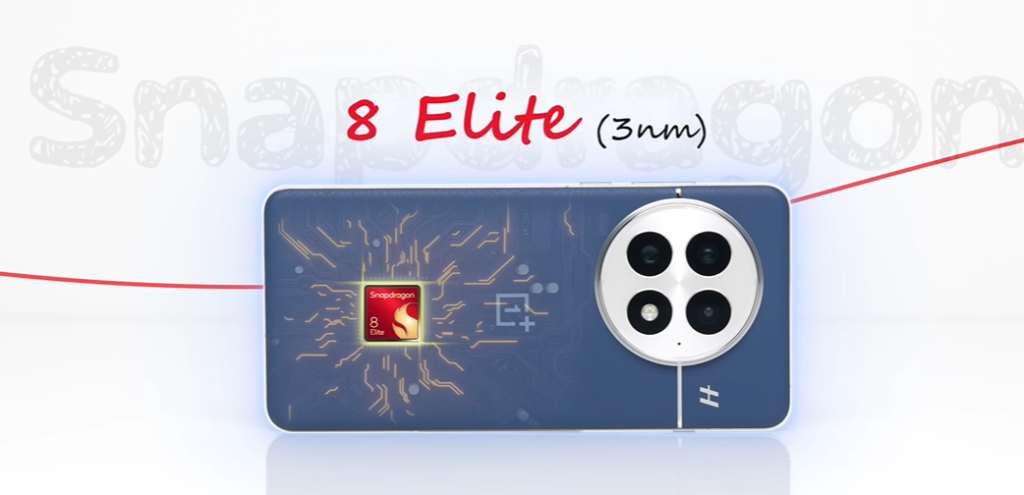
And now let’s talk about performance. This is a very interesting time for Android because never before has Android’s performance been slightly ahead of the competition. If you look at the history, the iPhone’s performance has always been superior. But ever since the latest processor, the Snapdragon Elite, came to Android, it has truly surpassed Apple’s processor.
If you look at the AnTuTu score, there’s a difference of 1.2 million points. However, Apple phones don’t usually score very high on the AnTuTu benchmark. But Geek bench has always been a benchmark where Apple phones couldn’t be beaten by Android, but this time, that has also changed. Because the OnePlus 13’s Geek bench scores are better than the iPhone 16. And if we talk about the GPU, that too is better on the OnePlus 13.
If you want to play heavy games, then the OnePlus 13 is a better option. You can play games with good settings and get good FPS. And there won’t be much of a heating issue while gaming.
And if you are a normal user, then the iPhone 16 offers better overall quality.
Camera:
Now let’s talk about the cameras of both phones. The OnePlus 13 comes with a 50MP + 50MP + 50MP setup, while the iPhone 16 has a 48MP + 12MP setup. And one thing is clear the image processing of both phones is very different. The OnePlus tries to capture brighter and more saturated photos, while the iPhone delivers more realistic and natural-looking photos. Both phones capture excellent detail, but when comparing HDR, the OnePlus 13 is better. In areas with more shadows, the OnePlus captures more detail. However, the iPhone delivers more accurate skin tones because it focuses on realistic skin tones.
But the OnePlus has an advantage: it has a 3X lens, which results in significantly better photos. And when it comes to the ultrawide lens, the OnePlus is also better. It has a larger sensor and is sharper, resulting in slightly better output. The dynamic range of the OnePlus is also better.
Also Read: OnePlus 12 vs Samsung S25 Ultra: The Ultimate Flagship Showdown in 2026
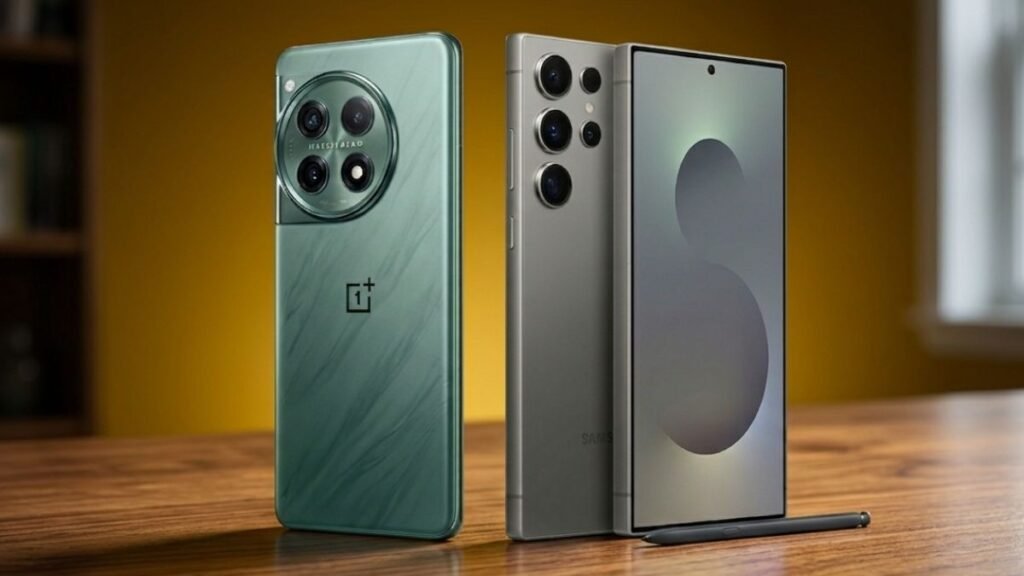
Talking about the front camera, the OnePlus has a 32MP front sensor, while the iPhone has a 12MP sensor. However, the iPhone takes better selfies.
If you want better overall camera performance and photos, the OnePlus 13 delivers superior results. But if you prefer natural-looking photos, then the iPhone 16 is the better choice. The iPhone 16 also records better videos than the OnePlus 13 because it offers a more natural look and better detail. This doesn’t mean the OnePlus 13 is bad; OnePlus has significantly improved its camera performance.
Conclusion:
So now let’s talk about the conclusion. Considering all the testing and other factors, the OnePlus 13 is a better phone compared to the iPhone 16.
The OnePlus 13 is a flagship phone available for under Rs. 70,000.
However, if you are a user who wants the Apple ecosystem and the 60Hz refresh rate doesn’t matter much to you, or if you need to shoot a lot of videos and you trust iOS more, then you can go with the iPhone 16.